By Lina Anderson | Co-Founder & Master Trainer at DAELA Academy
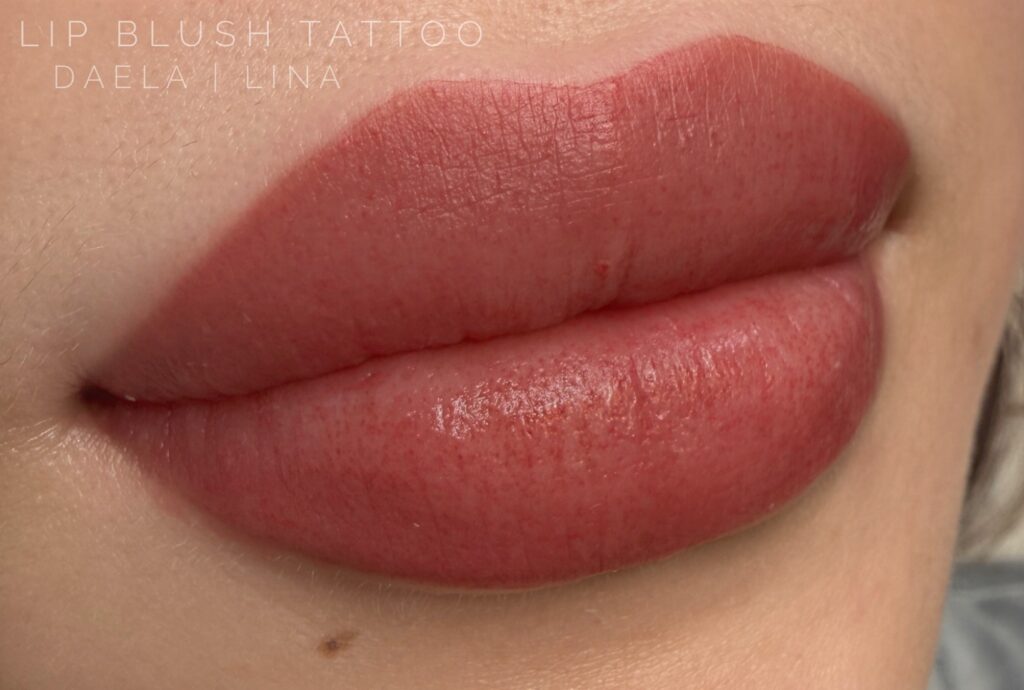
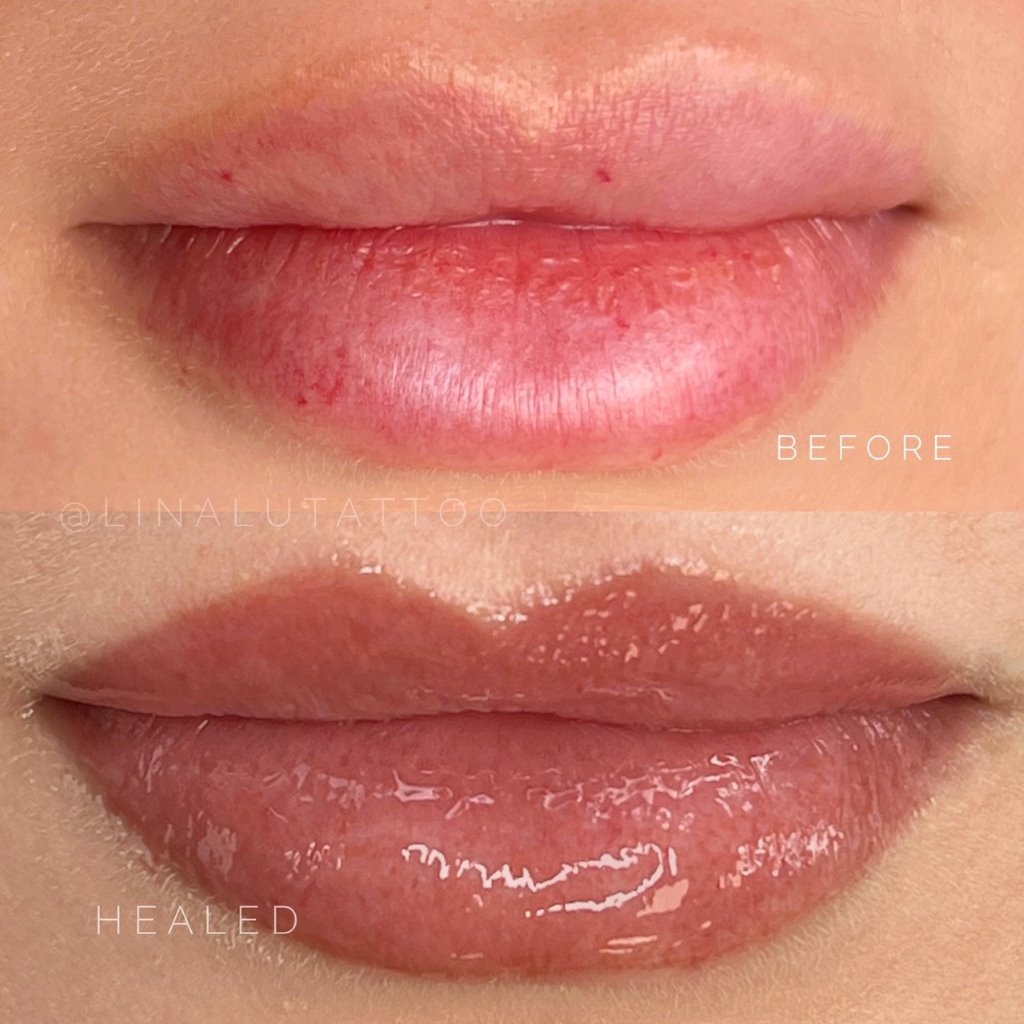
Lip blush is one of the most advanced and nuanced services in permanent makeup, and color theory is the foundation that determines whether your results are soft, balanced, and beautiful—or inconsistent and unpredictable.
Many new artists enter lip blush training thinking the process is primarily about choosing flattering colors and applying them evenly. But experienced artists know that lip blush is not about applying color. It is about understanding color in living skin.
Without a strong understanding of color theory, even technically skilled artists will struggle to produce consistent, healed results.
Why Lip Blush Is More Complex Than Other PMU Services
Compared to brows or eyeliner, lips present a much more complex canvas.
Brows are typically worked on relatively neutral skin. Eyeliner focuses on depth and precision. Lips, however, already contain visible pigment—and that pigment varies significantly from client to client.
Every client brings:
- A unique natural lip tone
- Varying levels of melanin
- Different undertones
- Uneven areas of pigmentation
This means you are not applying pigment onto blank skin. You are working with and against existing color at the same time.
This is what makes lip blush both challenging and rewarding.
The Three Core Elements of Lip Color Theory
To work confidently with lip blush, you must understand three key layers of color.
Natural Lip Tone
Natural lip tone is your starting point.
Lips can range from:
- Pale pink
- Neutral beige
- Cool purple or blue-toned
- Deep brown or hyperpigmented
Even within a single client, lips may have multiple tones—darker outer edges, lighter centers, or uneven patches.
This matters because your final result will always be influenced by what is already present.
If you ignore natural lip tone, your pigment choice may not behave the way you expect.
Undertone
Undertone is one of the most misunderstood aspects of lip blush.
A lip may appear neutral at first glance but carry cool undertones that cause pigment to heal darker or more muted. Another lip may appear darker but hold warmth that enhances brightness when pigment is applied.
Understanding undertone allows you to:
- Choose pigments that balance the lip
- Prevent unwanted color shifts
- Create predictable healed results
Without this step, artists often feel like results are inconsistent when in reality, they are simply misreading the canvas.
Desired Outcome
Not every client wants the same result.
Common goals include:
- Soft, natural enhancement
- Brightening dull or cool lips
- Neutralizing dark tones
- Creating a lipstick-style finish
Each of these requires a different pigment approach and technique.
Matching the pigment to both the starting point and the client’s goal is what separates beginner work from advanced work.
Neutralization vs Enhancement: The Most Critical Decision
One of the most important concepts in lip blush training is knowing when to neutralize and when to enhance.
When Neutralization is Needed
Neutralization is required when lips have:
- Cool undertones (purple, blue, gray)
- Dark pigmentation
- Uneven color
In these cases, applying a “target color” directly will not produce the desired result. Instead, you must first balance the underlying tone.
Neutralization uses corrective pigments to shift the lip into a more neutral base before enhancement.
When Enhancement Is Appropriate
Enhancement is used when lips are:
- Already balanced in tone
- Light to medium in pigmentation
- Even in color
In these cases, you can work more directly toward the desired outcome.
What Happens When This Step Is Skipped
Skipping neutralization when it is needed can result in:
- Ashy or gray healing
- Uneven color distribution
- Poor retention
- Client dissatisfaction
This is one of the most common mistakes new artists make.
Why Pigment Selection Alone Is Not Enough
Many beginners focus heavily on choosing the “right color.”
But pigment selection is only one part of the equation.
You must also understand:
- Depth of implantation
- Saturation level
- Number of passes
- Healing stages
- Individual client biology
Pigment behaves differently in the skin than it does in the bottle.
Blood flow, skin thickness, and healing response all influence the final result.
This is why lip blush is not just about color—it is about color behavior.
Common Mistakes New Lip Blush Artists Make
Understanding what goes wrong is just as important as understanding what works.
Some of the most common mistakes include:
Choosing Color Based on Appearance
Selecting pigment based on how it looks in the bottle rather than how it will heal in the skin.
Ignoring Undertones
Failing to assess whether the lips are cool, warm, or neutral before choosing pigment.
Overworking the Lips
Trying to “force” color into the lips by over-saturating, which can lead to trauma and poor healing.
Underestimating the Healing Process
Expecting the immediate result to reflect the final outcome, rather than understanding that lips soften and shift significantly during healing.
Skipping Neutralization
Applying enhancement color directly onto lips that require correction.
These mistakes are not due to lack of effort. They are due to lack of foundational color knowledge.
Real-World Client Scenarios
Color theory becomes clearer when applied to real situations.
Scenario 1: Cool-Toned Lips
A client with purple or blue undertones wants a warm pink result.
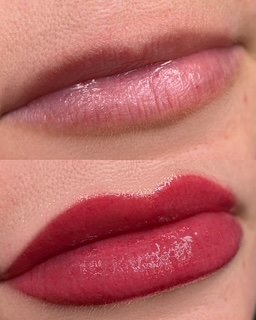
If you apply pink directly, it may heal muted or gray.
Solution: Neutralize first, then enhance.
Scenario 2: Dark or Hyperpigmented Lips
A client has deeper melanin and uneven tone.
Applying a light pigment directly will not create even brightness.
Solution: Gradual correction over multiple sessions.
Scenario 3: Very Light Lips
A client has minimal natural pigment.
Over-saturating can create an unnatural or overly bold result.
Solution: Build color slowly with controlled passes.
These scenarios highlight why customization is essential.
How to Choose a Lip Blush Training Program
Not all lip blush training programs are created equally.
A strong program should go beyond technique and include:
- In-depth color theory
- Undertone identification
- Neutralization strategies
- Healing expectations
- Real client case studies
If color theory is not a major part of the curriculum, the training is incomplete.
At DAELA Academy we will consult with you to help you decide which technique is best for you to start with! Contact us here and let’s start a conversation!
Frequently Asked Questions
Is lip blush harder than brows?
Yes, primarily because of the added complexity of color theory and lip anatomy.
Do all clients need neutralization?
No, but many do. The key is learning how to identify when it is necessary.
Can color mistakes be corrected?
Some can, but correction is more difficult than getting it right the first time.
How long does it take to understand color theory?
It takes practice, repetition, and exposure to different lip types.
Do lips heal exactly as applied?
No. Healing softens, lightens, and can shift tone slightly.
The Bottom Line
Lip blush is not about choosing a pretty color.
It is about understanding how color interacts with living skin, how it heals, and how to guide that process intentionally.
Color theory is not an advanced skill you learn later. It is the foundation you build everything on.
Artists who master it create results that are not only beautiful, but consistent, predictable, and truly customized to each client.
About Daela Academy
DAELA Academy is a globally recognized leader in cosmetic tattoo and permanent makeup education, known for setting a higher standard in both artistry and ethics. With students traveling from across the U.S. and internationally to train with our team, our reputation is built on consistently refined results, advanced technique, and a deep commitment to natural beauty.
Our trainers are not only artists, but industry educators who prioritize healed outcomes, skin integrity, and long-term client satisfaction. Every course is designed to move beyond trends, giving artists a strong, adaptable foundation that supports real career growth.
With locations in Portland and Scottsdale, serving over 25,000 clients with over 3,000 5-star reviews our growing global community of artists is in exceptional hands at DAELA Academy We will continue to shape the future of permanent makeup through thoughtful education, elevated standards, and a results-driven approach.